
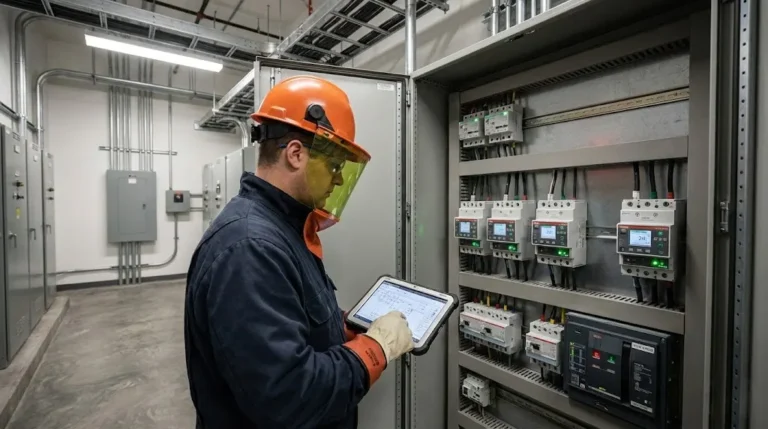
RCCB Testing
Sachu Technologies provides RCCB testing to verify residual current protection device operation, identify abnormal…

Sachu Technologies provides RCCB testing to verify residual current protection device operation, identify abnormal response and support electrical maintenance and safety inspections.
Request a Quote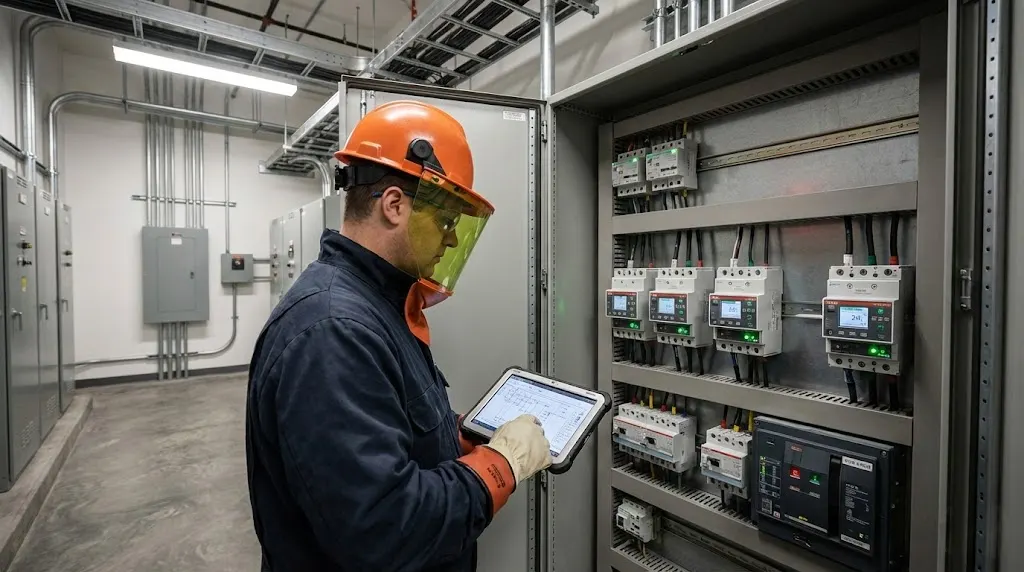
Sachu Technologies provides Residual Current Circuit Breaker (RCCB) testing services for industrial plants, commercial buildings, electrical installations, manufacturing facilities and other electrical infrastructure across India. RCCB testing helps verify whether a residual current circuit breaker operates correctly when it detects an earth leakage current. This testing supports electrical safety by checking the device's ability to disconnect the electrical supply under specified test conditions.
An RCCB is designed to detect an imbalance between the outgoing and returning electrical currents. This imbalance may occur when current flows through an unintended path, such as an earth leakage path. Therefore, regular RCCB testing helps identify defective devices, incorrect tripping behaviour and potential problems with the protective arrangement.
Sachu Technologies performs RCCB testing to assess trip current response, tripping time and the operational condition of the device using suitable testing equipment. The testing approach depends on the RCCB type, rated residual operating current, installation requirements and applicable testing procedures.
Moreover, RCCB testing supports preventive maintenance, electrical inspection and the verification of residual current protection in distribution boards, industrial electrical panels and commercial installations. The results help maintenance teams identify devices that require further investigation, corrective action or replacement.
RCCBs provide protection by disconnecting a circuit when they detect residual current above their operating threshold. However, a device may deteriorate, become defective or fail to operate as expected over time. Therefore, testing helps confirm its response under controlled conditions.
RCCB testing helps maintenance teams:
Regular testing, when performed according to the installation requirements and manufacturer's instructions, helps maintain confidence in the performance of residual current protection.
The scope of RCCB testing depends on the installation, device specifications and applicable test procedure. Typical checks may include the following:
The built-in test button provides a basic functional check. However, it does not replace instrument-based testing when measured tripping performance needs to be verified.
RCCB testing may cover different residual current protection devices, depending on the installation and available testing arrangements.
The suitable test method depends on the device's design and ability to respond to different residual current waveforms. Therefore, the device type must be identified before selecting the testing procedure.
RCCB testing is relevant wherever residual current protection forms part of an electrical installation.
Common applications include:
Testing requirements vary according to the installation design, equipment specifications and applicable safety procedures.
Sachu Technologies supports electrical testing and maintenance requirements across multiple sectors, including:
RCCB testing can form part of a wider electrical inspection and preventive maintenance programme.
The testing frequency depends on the installation type, operating environment, manufacturer's recommendations and applicable requirements. RCCB testing may be considered in the following situations:
Unexpected tripping should be investigated to determine whether the cause lies in the connected equipment, wiring, insulation condition, cumulative leakage current or the RCCB itself.
Professional RCCB testing provides useful information about the functional performance of residual current protection devices.
Key benefits include:
Testing provides information about the device's response under the conditions examined. It does not guarantee complete electrical safety or eliminate every electrical hazard.
Sachu Technologies provides RCCB testing services across India for industrial facilities, commercial buildings, electrical contractors, facility management teams and engineering organisations.
Our service coverage includes major industrial and commercial centres such as Hyderabad, Mumbai, Delhi, Bengaluru, Chennai, Pune, Ahmedabad, Kolkata, Gurugram and Noida. We also support service requirements in other industrial regions, subject to project scope, site access and scheduling.
Whether you require testing for an individual distribution board or multiple electrical panels across a facility, the testing scope can be discussed according to your installation requirements.
RCCB testing is the process of checking the operating response of a Residual Current Circuit Breaker using suitable test equipment and an appropriate test procedure.
Testing helps verify the operating response of an RCCB and can identify devices that do not respond as expected during testing. It also supports planned electrical maintenance and inspection.
RCCB testing can be performed in industrial plants, manufacturing facilities, commercial buildings, electrical panels, distribution boards and other suitable electrical installations.
Depending on the device and test procedure, testing can include RCCB trip operation, operating time and response under applicable residual-current test conditions.
Yes. Sachu Technologies provides RCCB testing services across India, including major locations such as Hyderabad, Mumbai, Delhi, Bengaluru, Chennai, Pune, Ahmedabad, Kolkata, Gurugram and Noida.
Sachu Technologies provides RCCB testing to verify residual current protection device operation, identify abnormal…
Learn More →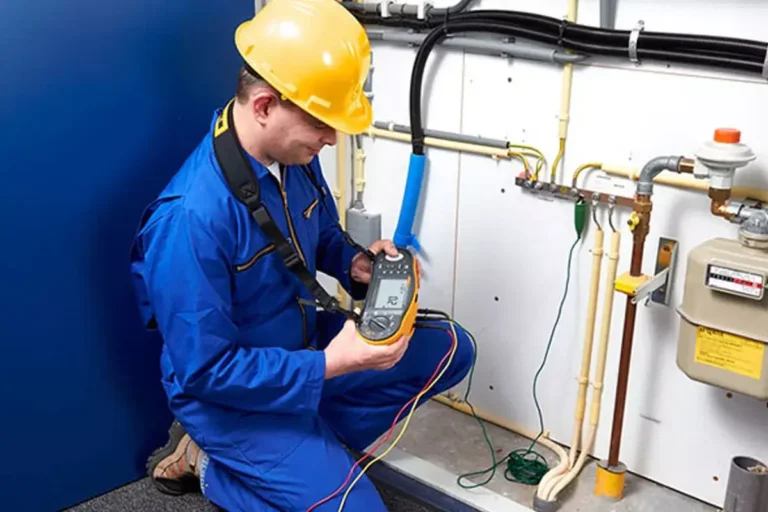
Earth Fault Loop Impedance Testing to assess fault-current paths and support protective-device checks in electrical…
Learn More →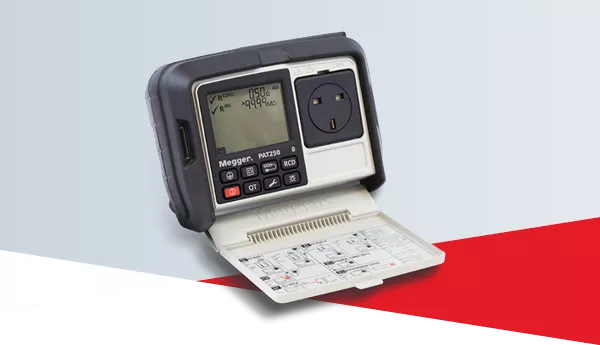
Sachu Technologies provides Portable Appliance Testing (PAT Testing) for electrical appliances in industrial, comme…
Learn More →
Electrical Safety Audit services identify hazards, protection gaps and unsafe practices. Sachu Technologies serves…
Learn More →No matching services found.
Contact Sachu Technologies to discuss your RCCB testing requirements, site conditions and testing scope. Our team can support testing requirements for industrial, commercial and infrastructure electrical installations across India.

ADDRESS: 15-29-887/C2, Lakshmi Nilayam, Road No – 2, KPHB Conony, Kukatpally, Hyderabad – 500072.
© 2026 Sachu Technologies. All Rights Reserved.
Tell us about your testing or inspection requirement. Our team will contact you shortly.