
Leak Detection and Steam Trap Testing
Unidentified compressed air leaks and malfunctioning steam traps can contribute to unnecessary utility losses and maintenance issues. Contact Sachu Technologies to discuss your leak detection and steam trap testing requirements. Our team can help define a suitable inspection scope based on your facility, equipment and operating conditions.
Request a Quote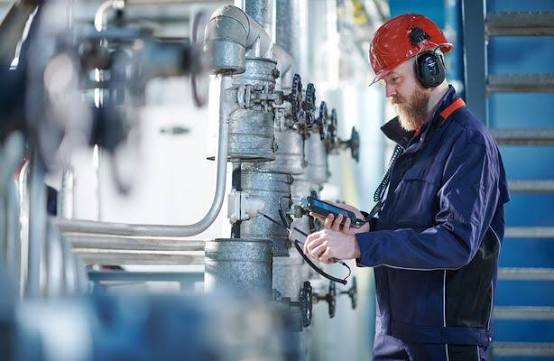
Leak Detection and Steam Trap Testing helps industrial facilities identify compressed air leaks, steam leaks, faulty steam traps, and other utility losses. These issues can increase energy consumption, reduce system efficiency, and affect equipment performance. Therefore, Sachu Technologies provides industrial leak detection and steam trap testing services to help maintenance teams identify problems and improve utility system reliability.
For example, compressed air systems may develop leaks at pipe joints, valves, fittings, hoses, and pneumatic connections. Similarly, steam traps can fail in different ways. A failed-open trap may allow live steam to escape into the condensate return system. In contrast, a failed-closed trap may prevent proper condensate removal. Consequently, both conditions can affect steam distribution and process performance.
To identify these issues, our inspection approach uses suitable testing methods, including ultrasonic inspection and temperature measurement where applicable. These techniques help maintenance teams assess leakage conditions and evaluate steam trap operation. As a result, engineers can investigate potential problems without relying solely on visual inspection.
Furthermore, our inspection findings support maintenance planning, energy management, and corrective action prioritisation. In addition, the service helps identify components that require further investigation or repair. We provide these services for manufacturing plants, process industries, utilities, commercial facilities, and other sites that depend on compressed air and steam systems.
Why Is Leak Detection and Steam Trap Testing Important?
Compressed air and steam are essential utilities in many industrial processes. However, leaks and faulty steam traps can remain undetected during routine operations. As a result, plants may experience unnecessary energy consumption, reduced process efficiency and avoidable maintenance costs.
Leak detection helps identify leakage points in accessible pressurised systems. Steam trap testing helps determine whether traps operate as expected under the conditions present during inspection.
In addition, regular testing provides maintenance teams with useful information for prioritising repairs. Instead of replacing components based only on age or suspicion, engineers can use inspection findings to investigate specific problem areas.
Key reasons to conduct these services include:
- Identifying compressed air leaks and accessible steam leakage points.
- Detecting steam traps that may be leaking, blocked or operating inefficiently.
- Investigating abnormal temperature conditions around steam traps.
- Supporting energy conservation and utility system maintenance.
- Reducing avoidable losses caused by defective components.
- Improving maintenance planning through documented inspection findings.
What Problems Can Leak Detection Identify?
Industrial leak detection focuses on identifying leakage points that may be difficult to locate through visual inspection alone.
Depending on the system and inspection conditions, the service can help identify:
- Compressed air leaks at pipe joints, couplings and fittings.
- Leakage around valves, regulators and pneumatic connections.
- Accessible steam leaks in distribution lines and associated components.
- Leakage from pressurised utility connections.
- Potential leakage points in industrial utility networks.
- Areas requiring further investigation or corrective maintenance.
Ultrasonic leak detection is particularly useful for locating many compressed air leaks because escaping pressurised gas can generate high-frequency sound. However, detection performance depends on factors such as operating pressure, background noise, access and the characteristics of the leakage point.
Steam Trap Testing and Condition Assessment
Steam traps remove condensate and, where designed to do so, non-condensable gases from steam systems while limiting the loss of live steam. Their correct operation supports heat transfer, process performance and condensate management.
Steam trap testing evaluates operating behaviour to identify conditions that may indicate malfunction. Depending on the trap type and site conditions, the assessment may use ultrasonic listening, temperature measurements and other suitable diagnostic checks.
The inspection can help identify the following conditions:
- Failed-open or leaking traps: Conditions that may indicate continuous steam loss.
- Failed-closed traps: Conditions that may indicate restricted condensate discharge.
- Blocked traps: Possible obstruction affecting condensate removal.
- Abnormal operating behaviour: Conditions that require further examination.
- Suspected bypass leakage: Leakage through bypass valves or associated connections, where accessible.
Temperature measurements alone may not reliably distinguish every failure mode. Therefore, the assessment should consider trap type, operating conditions, upstream and downstream temperatures, ultrasonic signals and other relevant observations.
Equipment and Systems Covered
Sachu Technologies can assess accessible components of industrial compressed air and steam utility systems, subject to site conditions and the agreed scope.
Typical inspection areas include:
- Compressed air distribution pipelines.
- Air receiver connections and accessible fittings.
- Pneumatic valves, couplings and hose connections.
- Steam distribution lines and accessible joints.
- Steam traps and associated condensate connections.
- Steam trap stations and accessible bypass arrangements.
- Utility valves and selected pressurised connections.
- Condensate return systems and associated components.
The final scope depends on system accessibility, operating conditions, site safety requirements and the inspection methods selected for the application.
Industries Served
Leak detection and steam trap testing can support facilities where compressed air and steam play an important role in production or utility operations.
Relevant industries include:
- Manufacturing and engineering industries.
- Pharmaceutical and chemical plants.
- Food and beverage processing facilities.
- Textile and paper manufacturing units.
- Cement and other process industries.
- Power plants and utility facilities.
- Oil and gas processing facilities, subject to suitable inspection procedures.
- Hospitals, commercial buildings and institutional facilities with relevant utility systems.
- Industrial facilities operated by EPC contractors and maintenance service providers.
The inspection scope is selected according to the site's utility arrangement, operational requirements and maintenance objectives.
When Should Leak Detection and Steam Trap Testing Be Performed?
Facilities should consider these services during routine utility maintenance, energy assessments and investigations into abnormal system performance.
Suitable occasions include:
- Periodic compressed air leakage surveys.
- Steam trap inspection programmes.
- Investigations into unexpectedly high utility consumption.
- Maintenance shutdowns and planned plant inspections.
- Commissioning or performance reviews of relevant utility systems.
- Follow-up inspections after repairs.
- Assessments of ageing steam distribution networks.
- Investigations into poor heating performance or condensate removal issues.
The inspection frequency should reflect system criticality, operating conditions, previous findings and the plant's maintenance programme.
Benefits for Maintenance and Energy Management
A structured leak detection and steam trap testing programme provides information that supports practical maintenance decisions.
Key benefits include:
- Improved leak visibility: Identify leakage points that may otherwise remain unnoticed.
- Better maintenance prioritisation: Focus repair work on confirmed or suspected problem areas.
- Energy management support: Identify conditions that may contribute to unnecessary compressed air or steam losses.
- Improved utility performance: Investigate issues affecting pressure, heat transfer or condensate removal.
- Reduced unnecessary replacement: Use inspection findings to guide further investigation and repair decisions.
- Maintenance documentation: Maintain records of findings, locations and recommended actions.
- Follow-up verification: Reinspect selected components after corrective work to assess the observed condition.
Actual savings and performance improvements depend on the faults identified, the corrective actions taken and the operating conditions of the facility.
Leak Detection and Steam Trap Testing Across India
Sachu Technologies provides industrial testing, inspection and condition-monitoring services across India. Our leak detection and steam trap testing services support manufacturing facilities, process industries, utilities and commercial organisations seeking to improve the management of compressed air and steam systems.
We serve industrial customers in Hyderabad, Mumbai, Delhi, Bengaluru, Chennai, Pune, Ahmedabad, Kolkata, Gurugram and Noida, along with other industrial locations across the country.
The service scope can be planned according to the number of inspection points, site accessibility, utility operating conditions and customer requirements. Contact Sachu Technologies to discuss your facility's inspection needs and the appropriate testing approach.
Our Approach
Step 1: Requirement Review
We review the customer's utility systems, inspection objectives, operating conditions and known maintenance concerns. This helps define the inspection scope and identify the areas that require attention.
Step 2: Inspection Planning
We identify the accessible compressed air lines, steam distribution components and steam trap locations included in the agreed scope. We also consider site access, operating conditions and applicable safety procedures.
Step 3: On-Site Inspection and Testing
We inspect the selected components using suitable methods, which may include ultrasonic leak detection, ultrasonic steam trap assessment and temperature measurements. The methods depend on the equipment, operating conditions and site requirements.
Step 4: Data Collection
We record relevant observations, component identification details, inspection locations and measurement results where applicable. This creates a basis for reviewing the condition of the inspected components.
Step 5: Analysis and Condition Assessment
We evaluate the collected information to identify confirmed leakage points, suspected steam trap faults and conditions requiring additional investigation. Where necessary, we distinguish between directly observed findings and suspected failure modes.
Step 6: Reporting and Recommendations
We prepare an inspection report describing the findings and recommended corrective actions. The report can help the maintenance team prioritise repairs and plan further investigations.
Step 7: Follow-Up Inspection
Where requested, we can inspect selected components after corrective work to assess whether the identified condition has improved. The scope and verification method depend on the original findings and the work completed.
Frequently Asked Questions
What is leak detection and steam trap testing?
Leak detection identifies leakage points in accessible compressed air, steam and other suitable pressurised utility systems. Steam trap testing assesses trap operation to identify conditions such as steam leakage, blockage or inadequate condensate discharge. The findings support maintenance planning and utility efficiency assessments.
How does ultrasonic leak detection work?
Ultrasonic leak detection uses specialised instruments to detect high-frequency sound associated with escaping pressurised gas. The technician scans accessible system components to locate potential leakage points. Detection performance depends on operating conditions, background noise, equipment capability and site accessibility.
How can faulty steam traps be identified?
Steam trap condition assessment may involve ultrasonic measurements, temperature checks and evaluation of operating conditions. These methods help identify abnormal behaviour that may indicate a failed-open, failed-closed or otherwise malfunctioning trap. The assessment method depends on the trap type and system conditions.
How often should steam trap testing and compressed air leak detection be performed?
The frequency depends on utility consumption, system criticality, operating conditions, maintenance history and previous inspection findings. Facilities with extensive compressed air networks or large numbers of steam traps may benefit from planned periodic surveys. The appropriate interval should be established according to site requirements and inspection results.
Does Sachu Technologies provide leak detection and steam trap testing across India?
Sachu Technologies provides industrial leak detection and steam trap testing to identify compressed air leaks, steam losses and faulty steam traps. Our inspection findings help maintenance teams prioritise repairs, assess utility system performance and support energy management across industrial facilities in India.
Identify Utility Leaks and Assess Steam Trap Performance
Unidentified compressed air leaks and malfunctioning steam traps can contribute to unnecessary utility losses and maintenance issues. Contact Sachu Technologies to discuss your leak detection and steam trap testing requirements. Our team can help define a suitable inspection scope based on your facility, equipment and operating conditions.