
Motor Current Signature Analysis
Motor Current Signature Analysis (MCSA) helps assess industrial motor condition by analysing current signals for patterns linked to electrical and mechanical faults. Sachu Technologies supports motor fault investigation, predictive maintenance and condition assessment for industrial facilities across India.
Request a Quote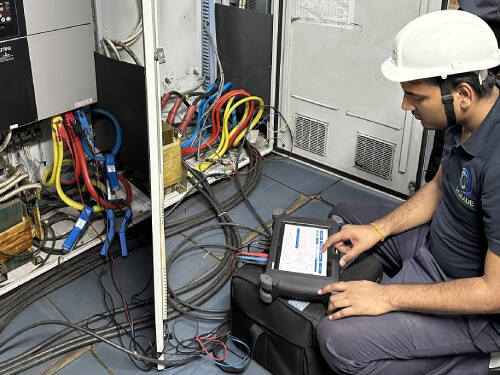
Sachu Technologies provides Motor Current Signature Analysis (MCSA) services to assess the condition of industrial electric motors. This method analyses motor current signals to identify patterns linked to possible electrical and mechanical faults. As a result, maintenance teams can better understand motor health and plan further inspections.
MCSA uses current measurements and frequency analysis to study motor behaviour. For example, it can help identify patterns linked to broken rotor bars, rotor imbalance and air-gap eccentricity in suitable motors. It can also help engineers investigate certain power supply and load-related problems.
Moreover, MCSA supports predictive maintenance by helping teams find unusual motor behaviour. Therefore, maintenance staff can investigate problems early and plan suitable corrective actions. In addition, regular measurements can help teams compare motor condition over time.
Sachu Technologies provides motor condition assessment services for manufacturing plants, power plants, industrial facilities and utilities across India. Our services help maintenance teams investigate motor problems and make informed decisions about equipment maintenance.
Why Is Motor Current Signature Analysis Important?
Electric motors play a key role in industrial operations. However, electrical faults, rotor defects and changing loads can affect their performance. If teams overlook these issues, they may face unexpected maintenance needs or production delays.
Motor Current Signature Analysis provides another way to assess motor condition. It examines current signals and their frequency components to find unusual patterns. As a result, engineers can decide whether a motor needs further testing or inspection.
Key benefits of MCSA include:
- Assessing the condition of industrial electric motors.
- Investigating current patterns linked to rotor faults.
- Checking for signs of certain electrical supply problems.
- Supporting motor fault diagnosis.
- Helping teams plan maintenance activities.
- Supporting predictive and condition-based maintenance.
- Creating baseline data for future comparison.
Furthermore, engineers can compare MCSA findings with motor specifications and operating conditions. Where necessary, they can use other tests to confirm a suspected fault.
What Problems Can Motor Current Signature Analysis Help Identify?
Broken Rotor Bars and Rotor Faults
Broken rotor bars can affect the current pattern of an induction motor. MCSA helps engineers look for frequency components linked to these faults. However, they must consider motor speed, load and operating conditions before drawing conclusions.
Air-Gap Eccentricity
The air gap is the space between the rotor and stator. If this gap becomes uneven, it can affect the motor's magnetic field. Under suitable conditions, MCSA may reveal patterns linked to this problem.
Electrical Supply Problems
Voltage imbalance and other supply issues can affect motor current. Therefore, current analysis can help engineers investigate abnormal motor behaviour. However, voltage measurements may also be needed to confirm the cause.
Stator-Related Electrical Faults
Some stator winding problems can change motor current patterns. MCSA may help investigate these changes. Nevertheless, additional electrical tests may be required to confirm the type and location of a winding fault.
Load and Mechanical Problems
Changes in load and certain mechanical problems can affect the current spectrum. For example, variations in driven equipment can produce changes in motor current. However, these patterns do not always point to one specific fault. Therefore, engineers may also use vibration analysis or mechanical inspection.
Equipment Covered Under MCSA Services
Motor Current Signature Analysis can help assess suitable industrial motors. However, the test method depends on the motor type, load and operating conditions.
Typical applications include:
- Three-phase induction motors.
- Industrial process motors.
- Pump motors and pumping systems.
- Fan and blower motors.
- Compressor motors.
- Conveyor drive motors.
- Manufacturing equipment motors.
- Water and wastewater treatment motors.
- Power plant auxiliary motors.
- Industrial utility motors.
In addition, MCSA may be suitable for selected motors that operate with variable-frequency drives (VFDs). However, these drives can introduce extra frequency components. Therefore, engineers must consider drive settings, motor speed and load when reviewing the results.
Industries That Use Motor Current Signature Analysis
Sachu Technologies supports industries that depend on electric motors for daily operations.
Our service applications include:
- Manufacturing and engineering.
- Steel and metal processing.
- Cement plants.
- Power generation and utilities.
- Oil, gas and process industries.
- Chemical and pharmaceutical plants.
- Food and beverage manufacturing.
- Water and wastewater treatment.
- Pulp and paper manufacturing.
- Mining and mineral processing.
- Commercial and industrial facilities.
For these industries, MCSA provides additional information about motor condition. Consequently, maintenance teams can investigate abnormal readings and decide which equipment needs further attention.
When Should You Perform Motor Current Signature Analysis?
MCSA can support routine condition checks, fault investigations and predictive maintenance programmes.
Consider this service when:
- A critical motor needs a condition assessment.
- You suspect a rotor-related fault.
- A motor shows unexplained operating changes.
- Your maintenance team needs to investigate recurring motor problems.
- You want to record baseline motor condition data.
- Your facility follows a condition-based maintenance plan.
- You need more information after an abnormal motor event.
Moreover, the testing schedule should reflect the motor's importance, operating conditions and maintenance history. This approach helps teams focus on the equipment that needs attention.
Motor Current Signature Analysis Services Across India
Sachu Technologies provides electrical testing, inspection and condition-monitoring services across India. We support industrial plants, manufacturing facilities, utilities and engineering organisations.
Our service coverage includes major industrial centres such as Hyderabad, Mumbai, Delhi, Bengaluru, Chennai, Pune, Ahmedabad, Kolkata, Gurugram and Noida. Service availability depends on the project scope and location.
Whether you need to investigate a motor fault or assess equipment condition, our team can review your requirements and discuss a suitable diagnostic approach.
Our Approach
Step 1: Review Your Requirements
First, we review the motor application, equipment details and reason for testing. This helps us understand the problem and assess whether MCSA is suitable.
Step 2: Assess the Motor and Operating Conditions
Next, we review available motor data, supply arrangements, load conditions and drive configuration. These details help us interpret the measurements correctly.
Step 3: Measure Motor Current
We collect current signals using suitable measurement equipment. Where possible, we consider the motor's load, speed and operating state during measurement. This helps provide useful data for analysis.
Step 4: Analyse the Current Signals
We examine the collected data and its frequency components. In addition, we look for unusual patterns that may indicate motor abnormalities. We also consider normal operating behaviour to avoid incorrect conclusions.
Step 5: Review the Findings
We assess the results alongside motor specifications and operating conditions. If the data suggests a possible fault, we may recommend further tests. For example, vibration analysis or electrical testing may help confirm the suspected problem.
Step 6: Prepare the Report
Finally, we prepare a report covering the assessment, key findings and recommended follow-up actions. The report helps your maintenance team plan further inspections and prioritise maintenance work.
Frequently Asked Questions
1. What is Motor Current Signature Analysis?
Motor Current Signature Analysis (MCSA) is a method used to assess motor condition by studying current signals and their frequency components. It helps engineers investigate patterns linked to certain electrical and mechanical faults.
2. Which motor faults can MCSA help identify?
MCSA can help investigate broken rotor bars, rotor asymmetry, air-gap eccentricity and certain supply or load-related problems. However, the results depend on motor design and operating conditions. Additional tests may be needed to confirm a fault.
3. Can you perform MCSA while the motor is running?
Yes, MCSA commonly uses current signals measured while the motor operates. However, the measurement method depends on the installation and available equipment. The work must also follow suitable electrical safety procedures.
4. Can MCSA be used for motors with variable-frequency drives?
Yes, MCSA may be suitable for selected motors controlled by variable-frequency drives. However, these drives can affect the current spectrum. Therefore, engineers must consider the drive settings, motor speed and load when interpreting the results.
5. Does Sachu Technologies provide MCSA services across India?
Yes, Sachu Technologies serves industrial customers across India, including Hyderabad, Mumbai, Delhi, Bengaluru, Chennai and Pune. Contact our team to discuss your motor type, application, location and testing requirements.
Need Motor Current Signature Analysis for Your Facility?
Unusual motor behaviour can require further investigation. Sachu Technologies can review your testing requirements and discuss a suitable approach to motor condition assessment. Contact our team to explore MCSA services for your industrial equipment.