
Partial Discharge Testing
Sachu Technologies provides partial discharge testing services to assess insulation condition in transformers, switchgear, GIS, high-voltage cables and other electrical ass
Request a Quote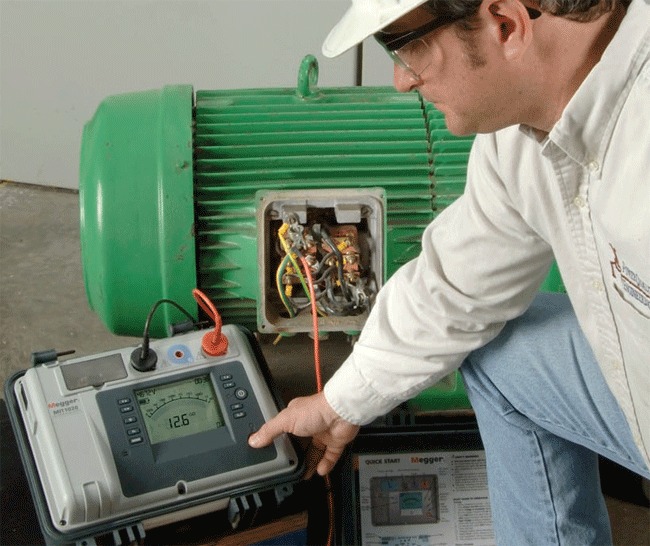
Partial discharge testing helps industries identify potential insulation defects in high-voltage electrical equipment. Partial discharge (PD) occurs when a localised electrical discharge develops within or around an insulation system without completely bridging the insulation between conductors. Over time, repeated discharge activity can weaken insulation and increase the risk of equipment failure.
Sachu Technologies provides partial discharge testing services to help industries assess electrical insulation condition. We support diagnostic requirements for power transformers, switchgear, high-voltage cables, rotating machines and gas-insulated switchgear (GIS). Moreover, our team evaluates the equipment type, operating conditions and diagnostic objectives before selecting a suitable testing approach.
Additionally, we use appropriate diagnostic techniques to help maintenance teams investigate abnormal discharge activity. Depending on the application, these techniques may include electrical partial discharge measurement, high-frequency current transformer (HFCT) testing, ultrasonic inspection and ultra-high-frequency (UHF) measurement.
Furthermore, partial discharge diagnostics help maintenance teams investigate potential insulation problems and plan suitable maintenance activities. As a result, industrial plants, utilities, EPC contractors and facility managers can make better-informed decisions about electrical asset reliability. Sachu Technologies supports these requirements across India.
What Is Partial Discharge Testing?
Partial discharge testing detects localised electrical discharges associated with weaknesses in insulation systems. These discharges may occur because of insulation voids, surface contamination, sharp electrical stress points or other insulation defects.
However, different electrical assets require different diagnostic methods. Therefore, our team considers the equipment design, voltage level, operating condition, accessibility and testing objectives before recommending an approach.
For example, technicians can use high-frequency current transformers (HFCTs) to detect discharge-related signals in suitable cable and electrical equipment configurations. Similarly, UHF sensors detect electromagnetic signals associated with partial discharge activity in compatible gas-insulated switchgear systems.
Moreover, technicians evaluate the measurement results to investigate potential insulation problems. Consequently, maintenance teams can determine whether additional diagnostic tests or inspections would provide useful information.
Why Is Partial Discharge Testing Important?
Electrical insulation can deteriorate because of ageing, electrical stress, contamination and operating conditions. Furthermore, some defects develop internally and remain difficult to identify through routine visual inspections.
Partial discharge testing helps maintenance teams investigate abnormal discharge activity and assess potential insulation problems. In addition, technicians can examine signal patterns and measurement results to identify indications that require further investigation.
However, discharge signals alone do not always establish the exact location or severity of an insulation defect. Therefore, technicians should compare the results with equipment history, operating conditions and other diagnostic evidence.
As a result, organisations can prioritise inspections, plan maintenance activities and assess the condition of critical electrical assets. This approach also supports condition-based maintenance and more informed asset management decisions.
Electrical Equipment Covered
Sachu Technologies assesses partial discharge testing requirements for different electrical assets according to the available diagnostic methods and equipment configuration.
Our potential applications include:
- Power and distribution transformers.
- Medium-voltage and high-voltage switchgear.
- Gas-insulated switchgear (GIS).
- High-voltage power cables and cable accessories.
- Motors and generators with suitable insulation systems.
- Other compatible high-voltage electrical equipment.
Additionally, our team considers the asset design, operating conditions and diagnostic objectives before recommending a suitable method. This assessment helps align the testing approach with the equipment's actual requirements.
Online and Offline Partial Discharge Testing
Online partial discharge testing helps technicians assess discharge activity while compatible electrical equipment remains energised and operational. Consequently, this method provides information about insulation behaviour under actual operating conditions.
However, electrical interference and background noise can affect online measurements. Therefore, technicians must select suitable sensors, evaluate noise levels and interpret the recorded signals carefully.
In contrast, offline partial discharge testing requires equipment isolation and a suitable test arrangement. This approach allows technicians to perform measurements under controlled conditions, depending on the equipment and test objectives.
Furthermore, the choice between online and offline testing depends on equipment type, safety requirements, accessibility and diagnostic needs. A suitable assessment helps maintenance teams select the appropriate testing method.
Our Approach
Sachu Technologies follows a structured approach to partial discharge testing, focusing on inspection, measurement, analysis, reporting and recommendations.
1. Requirement Assessment
We review the equipment type, operating conditions, available technical information and the client's diagnostic objectives. This helps determine the appropriate testing method.
2. Inspection and Test Planning
We assess the accessible equipment, identify suitable measurement points and plan the test according to the equipment configuration and site safety requirements.
3. Partial Discharge Measurement
We perform suitable measurements using the selected diagnostic method and compatible equipment. Where applicable, testing may involve electrical, HFCT, ultrasonic or UHF measurement techniques.
4. Signal Analysis and Interpretation
The recorded signals and measurement results are reviewed to identify relevant discharge activity, potential interference and indications that may require further investigation.
5. Reporting and Recommendations
We document the scope of work, test observations and relevant findings. Based on the available evidence, recommendations may include additional diagnostic testing, detailed inspection or planned maintenance.
Frequently Asked Questions
What is partial discharge testing?
Partial discharge testing is a diagnostic process used to detect and evaluate localised electrical discharges associated with insulation defects in high-voltage electrical equipment. It helps assess insulation condition and identify potential problems that may require further investigation.
Which equipment requires partial discharge testing?
Partial discharge testing may be suitable for transformers, medium-voltage and high-voltage switchgear, GIS, power cables, motors and generators. The appropriate method depends on the equipment design, insulation system and diagnostic requirements.
What is the difference between online and offline partial discharge testing?
Online testing is performed while compatible equipment remains energised, allowing discharge activity to be assessed under operating conditions. Offline testing is conducted under controlled conditions with the equipment isolated and connected to a suitable test arrangement.
Can partial discharge testing detect insulation defects before failure?
Partial discharge testing can identify discharge activity associated with certain insulation defects. However, detecting discharge activity does not guarantee that a failure will occur, and the absence of detected activity does not prove that insulation is defect-free. Results must be interpreted alongside equipment history, operating conditions and other diagnostic evidence.
Is partial discharge testing applicable to transformers?
Yes. Suitable partial discharge measurement methods can be used to investigate insulation-related discharge activity in power and distribution transformers. The selection of sensors and test procedures depends on the transformer design and whether testing is performed online or offline.
Discuss Your Partial Discharge Testing Requirements
Identify potential insulation problems and support electrical asset reliability with suitable partial discharge diagnostics. Contact Sachu Technologies to discuss your equipment, testing requirements and site conditions.