

Electrical systems can develop abnormal heating long before a visible failure occurs. Loose connections, overloaded circuits, deteriorating contacts, phase imbalance, and other electrical conditions may produce distinct thermal patterns. Identifying these patterns early can help maintenance teams investigate potential problems before they contribute to equipment damage or unplanned interruption.
Electrical thermography inspection provides a non-contact method for examining the thermal condition of energized electrical equipment. Sachu Technologies provides electrical thermography inspection services for industrial plants, commercial facilities, utilities, substations, infrastructure, and other electrical installations across India.

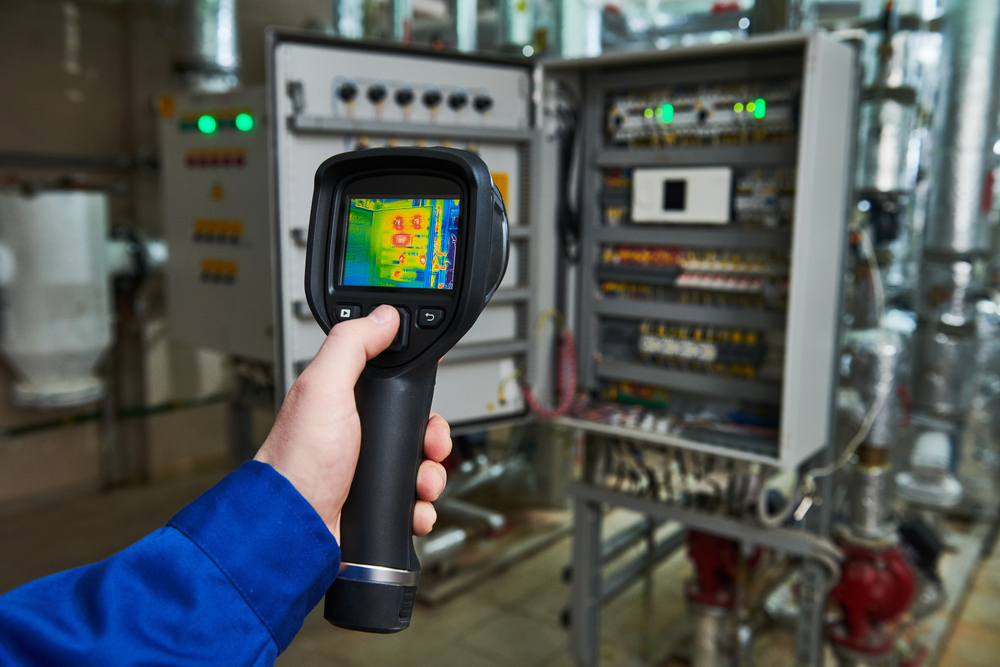
Electrical thermography uses an infrared thermal imaging camera to detect and visualize differences in surface temperature.
Every object above absolute zero emits infrared radiation. A thermal imaging camera detects this radiation and converts the measured infrared information into a thermal image, commonly called a thermogram.
During an electrical thermography inspection, a trained technician examines operating electrical equipment and looks for abnormal temperature patterns. These patterns can help identify components that require further investigation.
Because the inspection is non-contact, many electrical assets can be examined while they remain energized and operating, subject to appropriate site conditions and safety procedures.
Electrical faults do not always produce an immediate shutdown. In many cases, deterioration develops progressively.
For example, an electrical connection with increased resistance can generate additional heat. Similarly, abnormal loading or a deteriorating component may produce a temperature difference compared with similar components operating under comparable conditions.
Thermal inspection gives maintenance teams another source of condition information. As a result, they can identify suspicious thermal patterns, prioritize further investigation, and plan corrective maintenance based on observed conditions.
Regular thermography can therefore form part of a broader preventive or condition-based maintenance program.
Depending on equipment design, operating conditions, loading, accessibility, and the nature of the defect, thermography may help identify thermal indications associated with:
A thermal anomaly does not, by itself, establish the exact root cause. Therefore, findings should be interpreted together with equipment condition, electrical loading, operating history, measurements, and other relevant information.
Electrical thermography can be applied to many types of electrical assets.
Typical inspection areas include:
The actual inspection scope should be defined according to the installation, equipment accessibility, operating state, and customer requirements.
A useful thermography program involves more than simply taking thermal images.
First, the inspection team reviews the equipment scope, site conditions, accessibility, operating status, and known concerns.
This helps determine which assets can be inspected and whether any special access or safety arrangements are necessary.
Next, accessible electrical equipment is examined using a suitable infrared thermal imaging camera.
The technician compares relevant components and looks for unusual temperature patterns. Wherever practical, equipment should be operating under representative conditions because electrical loading can significantly influence thermal behaviour.
The inspector records thermal patterns that require attention.
However, temperature alone should not be treated as a complete diagnosis. Equipment type, load, ambient conditions, component comparison, emissivity, viewing conditions, and other factors can affect interpretation.
Relevant findings can be documented using thermal images and corresponding visual images where appropriate.
Equipment identification, observed conditions, temperature information, and inspection notes may also be included depending on the agreed scope.
Finally, the inspection findings are organized into a report.
The report helps maintenance personnel identify areas requiring further investigation, corrective action, monitoring, or follow-up inspection.
Thermography can reveal thermal differences that may not be apparent during a normal visual inspection. Therefo
ADDRESS: 15-29-887/C2, Lakshmi Nilayam, Road No – 2, KPHB Conony, Kukatpally, Hyderabad – 500072.
© 2026 Sachu Technologies. All Rights Reserved.
Tell us about your testing or inspection requirement. Our team will contact you shortly.