
Harmonic Study Services
A Harmonic Study measures waveform distortion, identifies dominant harmonic orders, and supports practical planning for electrical system improvement.
Request a Quote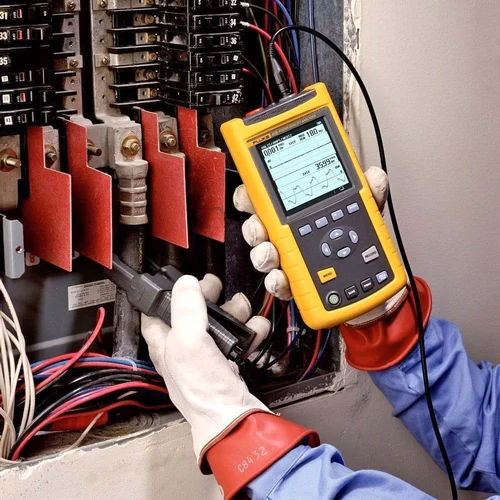
Harmonic Study Services
A Harmonic Study measures voltage and current waveform distortion within an electrical system. It helps identify dominant harmonic orders, affected feeders, possible harmonic sources, and operating conditions linked with distortion.
Sachu Technologies provides harmonic assessment services for industrial plants, utilities, substations, commercial facilities, data centres, renewable energy plants, and critical electrical networks across India. The final scope depends on the distribution system, connected loads, measurement points, operating cycles, and study objective.
What Is a Harmonic Study?
An ideal electrical waveform follows a smooth sinusoidal shape. However, non-linear loads draw current in a way that can distort the normal waveform. This distortion contains frequency components called harmonics.
Common non-linear loads include variable frequency drives, UPS systems, rectifiers, inverters, switched-mode power supplies, welding systems, and other power-electronic equipment.
A harmonic study measures the voltage and current harmonic spectrum at selected points. It may assess total harmonic distortion, individual harmonic orders, phase conditions, power factor, load current, and related electrical parameters.
The study can also compare measurements across incomers, feeders, or major loads. Therefore, engineers can examine how distortion changes across the electrical network and during different operating conditions.
Why Is a Harmonic Study Important?
Excessive harmonic distortion can affect cables, transformers, motors, capacitor banks, neutral conductors, protection systems, and sensitive electronic equipment.
Harmonic currents may increase electrical losses and equipment heating. In addition, certain harmonic conditions can affect power factor or place added stress on capacitors and transformers.
However, equipment overheating or capacitor failure does not automatically confirm a harmonic problem. Loading, ventilation, connection condition, equipment age, and system design may also contribute.
A measured study helps separate assumptions from recorded behaviour. As a result, maintenance teams can assess dominant harmonic orders, identify affected areas, and decide whether further engineering analysis or mitigation planning is required.
Who Needs This Service?
Harmonic studies support manufacturing plants, process industries, data centres, hospitals, commercial buildings, pharmaceutical facilities, utilities, renewable energy plants, and facilities with large electronic loads.
Electrical teams may request the service when they experience transformer heating, capacitor-bank problems, high neutral current, equipment malfunction, protection trips, or power factor concerns.
EPC contractors and consultants can also use harmonic measurements during commissioning, system expansion, or major load additions. Furthermore, sites adding drives, UPS systems, inverters, rectifiers, or other non-linear loads may require an assessment of their effect on the network.
When Should the Service Be Performed?
A facility should consider a harmonic study when it observes distorted waveforms, equipment heating, repeated capacitor problems, excessive neutral current, or unexplained electrical disturbances.
The study can also support commissioning, preventive maintenance, system expansion, filter planning, capacitor-bank review, or the addition of significant non-linear loads.
Measurements should represent the relevant operating cycle. For example, harmonic levels may change as production lines, drives, inverters, or UPS systems change their load. Therefore, Sachu Technologies reviews the site operation before selecting the measurement points and monitoring period.
What Does the Service Cover?
The typical study scope may include:
- Voltage and current waveform measurement
- Total voltage and current harmonic distortion
- Individual voltage and current harmonic orders
- Harmonic spectrum at selected measurement points
- Load current, power factor, and demand trends
- Phase imbalance and neutral-current observations
- Comparison of incomers, feeders, and major loads
- Review of operating patterns linked with distortion
The final scope depends on the network design, load profile, safe measurement access, study duration, and agreed technical criteria.
Service Deliverables
The client typically receives a structured technical report based on the agreed scope. It may include measurement tables, harmonic spectra, trend graphs, waveform records, load observations, and condition findings.
The report may identify dominant harmonic orders and measurement points with notable distortion. It can also highlight equipment or operating conditions that require further checks.
Where the evidence supports it, Sachu Technologies may recommend extended monitoring, load review, capacitor assessment, system modelling, or harmonic mitigation evaluation. However, filter selection and design may require additional system data and engineering analysis.
Harmonic Study Across India
Sachu Technologies provides Harmonic Study services for industrial and commercial clients across India, including Hyderabad, Mumbai, Delhi, Bengaluru, Chennai, Pune, Ahmedabad, Kolkata, Gurugram, and Noida. Share your site location, single-line diagram, connected loads, reported concerns, operating pattern, shutdown availability, and preferred schedule to discuss a suitable study scope.
Our Approach
Inspect
We review the electrical distribution system, single-line diagram, transformer details, capacitor banks, major non-linear loads, and reported concerns. We also identify suitable measurement points and operating conditions for the study.
Measure
We record voltage, current, harmonic spectrum, distortion levels, load, power factor, and related parameters at agreed locations. The selected measurements and duration depend on the system design, operating cycle, and study purpose.
Analyze
We examine waveform distortion, individual harmonic orders, load changes, phase conditions, and measurement trends. Next, we compare data across selected feeders and equipment to locate patterns, affected areas, and possible harmonic sources.
Report
We prepare a structured report with measurement results, harmonic spectra, trend graphs, observations, and condition findings. The report explains significant harmonic behaviour and identifies areas that may require further checks, monitoring, or engineering assessment.
Recommend
We suggest practical actions based on recorded evidence and system conditions. Recommendations may include load checks, capacitor-bank assessment, extended monitoring, equipment review, system modelling, or a detailed evaluation of suitable harmonic mitigation measures.
Frequently Asked Questions
1. What is a Harmonic Study?
A Harmonic Study measures voltage and current waveform distortion within an electrical system. It identifies total distortion, individual harmonic orders, affected measurement points, and operating conditions linked with harmonic levels. The final study scope depends on the electrical network and connected loads.
2. Why and when is a harmonic assessment required?
A harmonic assessment is useful when a facility experiences transformer heating, capacitor failures, high neutral current, power factor concerns, nuisance trips, or sensitive equipment problems. It can also support commissioning, system expansion, filter planning, and the addition of large non-linear loads.
3. What equipment and loads can the study assess?
The study can assess incomers, feeders, transformers, capacitor banks, drives, UPS systems, rectifiers, inverters, welding systems, and other non-linear loads. However, the final coverage depends on the system design, safe measurement access, operating conditions, and assessment objective.
4. Does a Harmonic Study require a shutdown?
A complete shutdown is not always required because the study needs measurements during actual operation. However, connecting or removing instruments may require controlled access, isolation, or an approved work condition. The requirement depends on the panel design, measurement points, and site safety procedures.
5. What will we receive after the harmonic study?
You will receive a technical report based on the agreed measurements. It may include harmonic spectra, waveform records, trend graphs, distortion values, load information, observations, and findings. Where appropriate, the report will recommend further monitoring, equipment checks, modelling, or mitigation assessment.
Plan Your Electrical Harmonic Study
Share your site location, electrical system details, major connected loads, reported concerns, service requirement, and preferred schedule. Sachu Technologies provides PAN India support and can discuss a suitable harmonic measurement scope.