
Harmonic Study
Sachu Technologies provides harmonic study services to measure distortion, assess harmonic sources, and evaluate their effect on electrical systems.
Request a Harmonic Study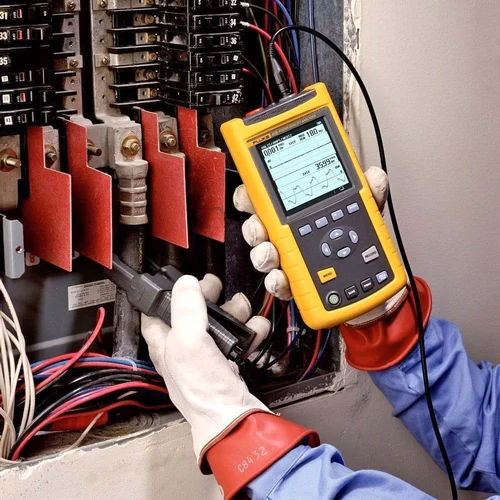
About the Service
A harmonic study measures and evaluates waveform distortion in an electrical system. Harmonics are voltage or current components at multiples of the fundamental supply frequency. They are commonly produced by non-linear loads such as variable frequency drives, UPS systems, rectifiers, inverters, switched-mode power supplies, LED drivers, and electronic equipment.
Sachu Technologies provides harmonic study services for industrial plants, commercial buildings, data centres, hospitals, manufacturing facilities, renewable-energy installations, and other electrical systems across India.
A suitable power quality analyser is connected at selected measurement points to record voltage, current, harmonic distortion, individual harmonic orders, load conditions, power factor, and related electrical parameters. Monitoring may be carried out at incomers, transformers, distribution panels, capacitor banks, major loads, or other relevant points.
The recorded data is analysed to understand harmonic levels, dominant harmonic orders, phase-wise behaviour, load patterns, and possible sources of distortion. Findings are documented in a technical report to support further engineering assessment and corrective planning.
Harmonic measurements should be evaluated together with system design, load type, transformer capacity, capacitor-bank configuration, operating conditions, and equipment specifications. Additional measurements or engineering calculations may be required before selecting mitigation equipment.
Parameters We Analyze
- Voltage total harmonic distortion
- Current total harmonic distortion
- Individual voltage harmonic orders
- Individual current harmonic orders
- Harmonic spectrum
- Voltage and current waveforms
- Phase-wise voltage and current
- Neutral current
- Load imbalance
- Power factor
- Active, reactive, and apparent power
- Maximum demand and load profile
- Transformer and feeder loading
- Harmonic variation under changing loads
- Capacitor-bank operating conditions
Harmonic-Related Concerns We Investigate
- Overheating of transformers and cables
- High neutral current
- Capacitor-bank overheating or failure
- Nuisance tripping of protective devices
- Unexpected fuse operation
- Motor overheating or vibration
- Distorted voltage and current waveforms
- Poor power-factor performance
- Interference with sensitive electronic equipment
- Increased electrical losses
- Unstable operation of drives and control systems
- Reduced equipment reliability
- Unexplained electrical noise
- Repeated equipment malfunction
- Conditions requiring harmonic mitigation assessment
Our Approach
1. Assess
We review the electrical system, connected non-linear loads, reported concerns, operating conditions, and objectives of the harmonic study.
2. Plan
Suitable measurement locations, electrical parameters, monitoring duration, and operating periods are selected based on the system and study requirements.
3. Measure
A power quality analyser is installed to record harmonic distortion, individual harmonic orders, voltage, current, power factor, load profile, and related parameters.
4. Analyze
The recorded data is evaluated to identify dominant harmonics, distortion patterns, load-related variations, phase imbalance, and possible harmonic sources.
5. Report
A structured report is prepared with measurement details, harmonic spectra, waveform information, trends, observations, and identified concerns.
6. Recommend
Findings are presented to help the facility evaluate load balancing, system modifications, filtering options, equipment selection, or additional engineering studies.
Frequently Asked Questions
Electrical harmonics are voltage or current components with frequencies that are multiples of the fundamental power frequency. They distort the normal electrical waveform.
Common sources include variable frequency drives, UPS systems, rectifiers, inverters, battery chargers, welding equipment, LED drivers, and switched-mode power supplies.
Current harmonics are generally produced by non-linear loads. When harmonic currents flow through the system impedance, they can contribute to voltage distortion.
Total harmonic distortion, commonly called THD, indicates the combined harmonic content of a voltage or current waveform relative to its fundamental component.
Measurements at multiple distribution levels can help narrow down possible sources. However, complex systems may require additional measurements and engineering analysis.
Yes. Sachu Technologies provides harmonic measurement and study services for industrial and commercial electrical systems across India.
Schedule a Harmonic Study
Measure waveform distortion, investigate harmonic-related concerns, and obtain reliable data for corrective planning. Contact Sachu Technologies to discuss your electrical system, connected loads, monitoring period, and reporting requirements.
Request a Harmonic Study