
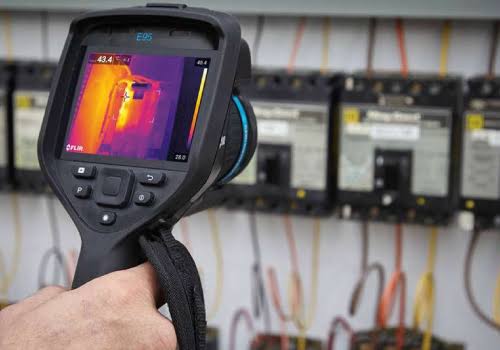
Thermography Inspection Services for Safer and More Reliable Equipment
Electrical and mechanical equipment can develop abnormal heat before visible signs of damage appear. Loose connections, overloaded circuits, unbalanced loads, worn components, and inadequate cooling may all produce unusual temperature patterns. Identifying these conditions at an early stage can support safer operation and better maintenance planning.
Sachu Technologies provides professional thermography inspection services for industrial and commercial facilities across India. Our inspections use thermal imaging equipment to examine operating assets without direct contact. The resulting thermal images and temperature measurements help maintenance teams evaluate equipment conditions and prioritize further investigation.
What Is a Thermography Inspection?
Thermography inspection is a non-contact method of measuring and visualizing surface temperature patterns. A thermal imaging camera detects infrared energy emitted by an object and converts it into a thermal image.
Different colours or temperature values within the image represent variations across the inspected surface. An abnormal heat pattern may indicate increased electrical resistance, excessive loading, friction, poor cooling, insulation problems, or another condition requiring attention.
Thermal imaging does not determine every underlying cause on its own. Therefore, findings should be reviewed alongside operating load, equipment condition, visual observations, maintenance history, and relevant electrical measurements.
Why Are Thermography Inspection Services Important?
Many electrical and mechanical problems develop gradually. During normal visual inspection, a component may appear acceptable even when its operating temperature is unusually high.
Thermography inspection services help maintenance teams identify and document these temperature variations while equipment is operating. Early findings can support timely investigation and planned maintenance.
Regular thermal inspections can help organisations:
Identify abnormal temperature patterns
Detect possible loose or high-resistance connections
Locate overloaded or unbalanced electrical components
Examine equipment without physical contact
Reduce unnecessary interruption to operations
Prioritize maintenance activities
Document equipment conditions with thermal images
Compare findings during future inspections
Support electrical safety and preventive maintenance programmes
Electrical Thermography Inspection
Electrical thermography is commonly used to inspect energized electrical systems under normal operating conditions. A loose connection or damaged contact may create resistance, which can result in localized heating.
The temperature of electrical equipment can also be affected by load, airflow, ambient temperature, surface properties, and nearby heat sources. For this reason, inspection conditions and operating information should be considered when analysing a thermal image.
Electrical thermography inspection may cover:
Main electrical panels
Switchboards and switchgear
Busbars and bus couplers
Circuit breakers
Fuse connections
Cable joints and terminations
Contactors and relays
Distribution boards
Motor control centres
Transformers
Generator control panels
UPS systems
Battery connections
Capacitor banks
Variable-frequency drives
Isolators and disconnect switches
Where safe access and operating conditions permit, the thermographer records relevant thermal patterns and supporting visual images for further analysis.
Mechanical Thermography Inspection
Thermal imaging can also support the inspection of mechanical equipment. Excessive friction, lubrication problems, misalignment, restricted cooling, and uneven loading may cause abnormal surface temperatures.
Mechanical thermography may be applied to:
Motors
Pumps
Bearings
Gearboxes
Couplings
Conveyors
Compressors
Fans and blowers
Rotating equipment
Heating and cooling systems
Thermography is often most useful when combined with techniques such as vibration analysis, ultrasonic inspection, and motor current signature analysis. These methods provide different information and can help maintenance teams assess equipment more effectively.
Solar Thermography Inspection
Thermal imaging can help identify unusual temperature patterns in solar photovoltaic modules and associated electrical systems. Hotspots may be related to damaged cells, connection problems, shading, contamination, or other operating conditions.
A solar thermography inspection may include:
Photovoltaic modules
Module strings
Junction boxes
DC connectors
Combiner boxes
Inverters
AC and DC distribution panels
Cable terminations
The inspection should be performed under suitable environmental and operating conditions. Solar irradiance, wind, viewing angle, reflections, and system load can affect the observed thermal pattern.
How Is a Thermography Inspection Conducted?
1. Inspection planning
The inspection begins by understanding the facility, equipment, operating conditions, safety requirements, and inspection scope.
2. Visual assessment
Accessible equipment is visually reviewed for signs such as discoloration, contamination, damaged insulation, loose components, or restricted ventilation.
3. Thermal scanning
The thermographer scans the selected equipment using an appropriate thermal imaging camera. Equipment should normally be operating under a representative load for meaningful comparison.
4. Temperature evaluation
Observed thermal patterns are compared with similar components, phases, operating conditions, and available reference information. Relevant temperature differences are recorded.
5. Analysis
The findings are reviewed to identify patterns that may require further investigation. Load, ambient conditions, equipment design, and measurement limitations are considered.
6. Technical reporting
A structured thermography inspection report is prepared with thermal images, visual photographs, temperature information, observations, and recommendations where appropriate.
What Does a Thermography Inspection Report Include?
A clear report helps maintenance teams understand the location and nature of each observation. Depending on the agreed inspection scope, the report may include:
Equipment identification
Inspection date and location
Thermal and visual images
Recorded temperature information
Temperature differences
Operating or load information, when available
Description of the observed condition
Classification or priority of findings
Suggested areas for further investigation
General maintenance recommendations
Thermal findings should be evaluated by qualified personnel before repair or operational decisions are made. If an abnormal pattern is identified, additional electrical or mechanical testing may be required to confirm the cause.
When Should Thermography Inspection Be Performed?
The appropriate inspection frequency depends on equipment criticality, operating conditions, previous findings, maintenance history, and site safety requirements.
Thermography inspection may be considered:
During planned preventive maintenance
Before a major shutdown
After installation or system modification
After tightening or repair work
When repeated tripping or overheating occurs
Before seasonal peak loads
When equipment operates continuously
As part of an electrical safety audit
During periodic condition-monitoring programmes
Maintaining consistent inspection conditions can also make future thermal comparisons more useful.
Industries That Can Benefit from Thermal Inspection
Thermography inspection services can support facilities with critical electrical or mechanical assets, including:
Manufacturing plants
Data centres
Commercial buildings
Hospitals
Hotels
Shopping centres
Warehouses
Pharmaceutical facilities
Food-processing plants
Power and utility facilities
Renewable-energy installations
Educational institutions
Infrastructure facilities
The inspection scope should always be adapted to the equipment, operating environment, and maintenance objectives of each site.
Why Choose Sachu Technologies?
Sachu Technologies provides thermography inspection services with a systematic, safety-focused approach. We combine thermal observations, relevant operating information, and clear technical reporting to help clients understand equipment conditions and plan suitable maintenance actions.
Our service approach includes:
Experienced inspection professionals
Suitable thermal imaging and measurement equipment
Systematic inspection planning
Thermal and visual documentation
Clear technical observations
Practical maintenance recommendations
Customized inspection scope
Minimal disruption to normal operations
PAN India service support
Schedule a Thermography Inspection
Abnormal heat patterns can provide useful information about the condition of electrical and mechanical equipment. A planned thermography inspection helps maintenance teams locate areas requiring attention and document their findings before deciding on corrective action.
Contact Sachu Technologies to discuss thermography inspection services for your industrial or commercial facility. Our team can help define the inspection scope based on your equipment, operating conditions, and maintenance requirements.